Founding Vision
We started Stellios to build the next generation of American power systems.
Compact fusion, directed energy, high-power microwaves, hypersonics, and space propulsion may appear to be separate industries. But they share the same fundamental limiting constraint: energy and power density. The next leap in American technological progress will demand far more energy and power than today's combustion-based architectures can provide.
The path beyond this limitation is to move from combustion-scale to fusion-scale energy density — a leap of over a million times, from tens of megajoules per kilogram to terajoules. Systems at this frontier run on the physics foundation of controlling charged particles and plasma flows in high-field vacuum chambers while handling extreme heat fluxes and electrical currents. Mastering this frontier unlocks the future of power generation, propulsion, directed energy, defense and other industries.
Several recent breakthroughs make this frontier accessible. Modern high-power switches, affordable HTS magnets, AI-driven simulation, and real-time control are removing the limitations that constrained earlier generations of high-energy technologies. These technological unlocks arrive at the precise moment when demand for next-generation power, propulsion, and directed energy is surging.
Our mission at Stellios is to ensure the United States leads the next power frontier, wins the race to compact fusion, and restores America's historic dominance in high-energy power systems. That is why we are building a vertically integrated company that generates extreme power, controls it, conditions it, and applies it across defense, propulsion, space, and energy.
Historic Context
America invented this field. Compact fusion demonstrators were pioneered at Los Alamos decades ago. The klystron and high-power microwave systems were born in Silicon Valley nearly a century ago. For more than half a century, American labs and companies set the global pace in high-energy power systems.
Then we let this strategic industry atrophy. Over the past three decades, talent dispersed, production lines deteriorated, and critical supply chains moved offshore. Today, fielding even a MW-class system routinely takes 12 to 24 months, depends on foreign components, and requires starting from a blank sheet almost every time.
At Stellios we are on a mission to reverse this decline, restore American leadership in extreme power systems, and rebuild a robust domestic manufacturing base for the high-energy technologies of the future.
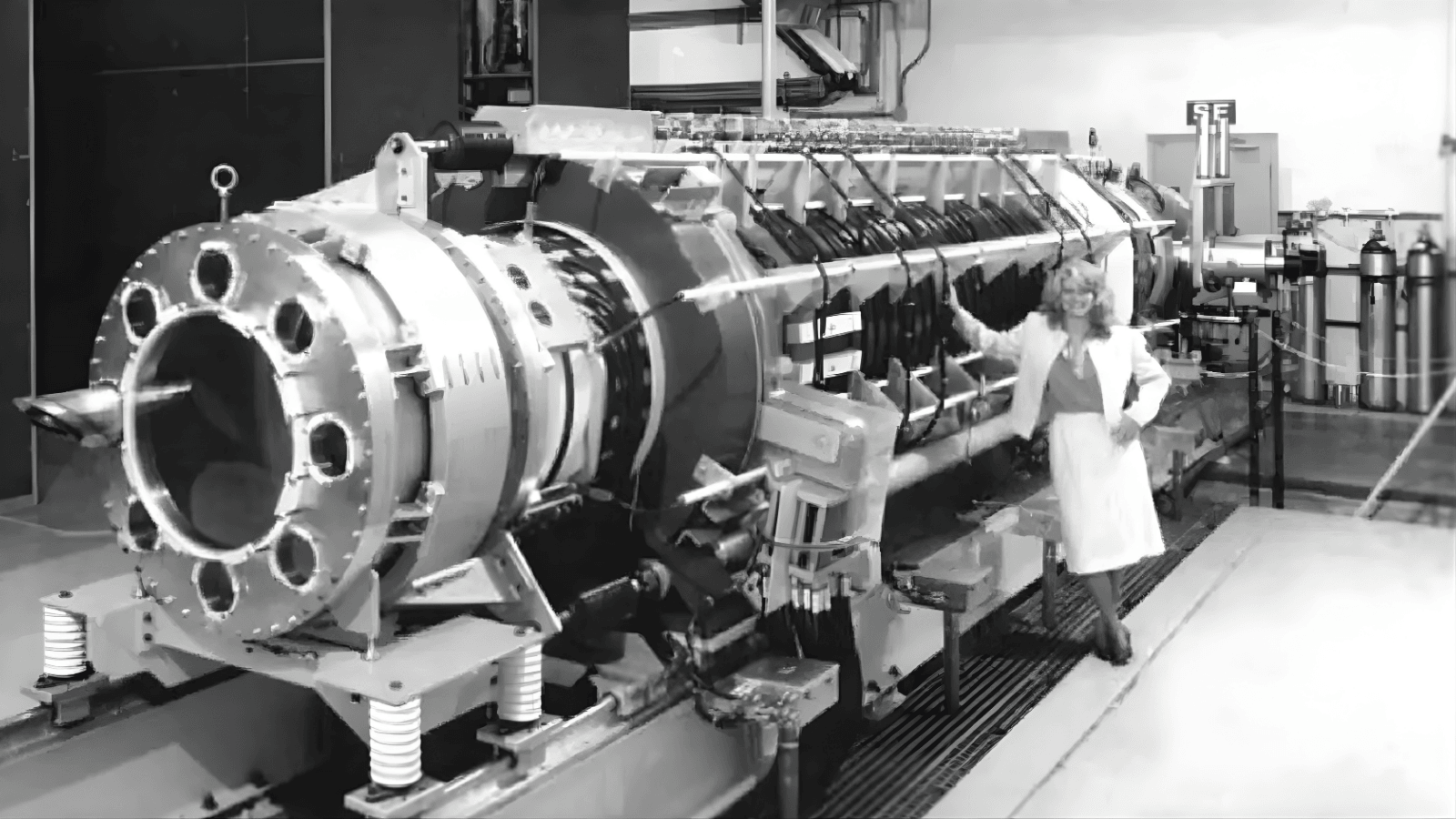
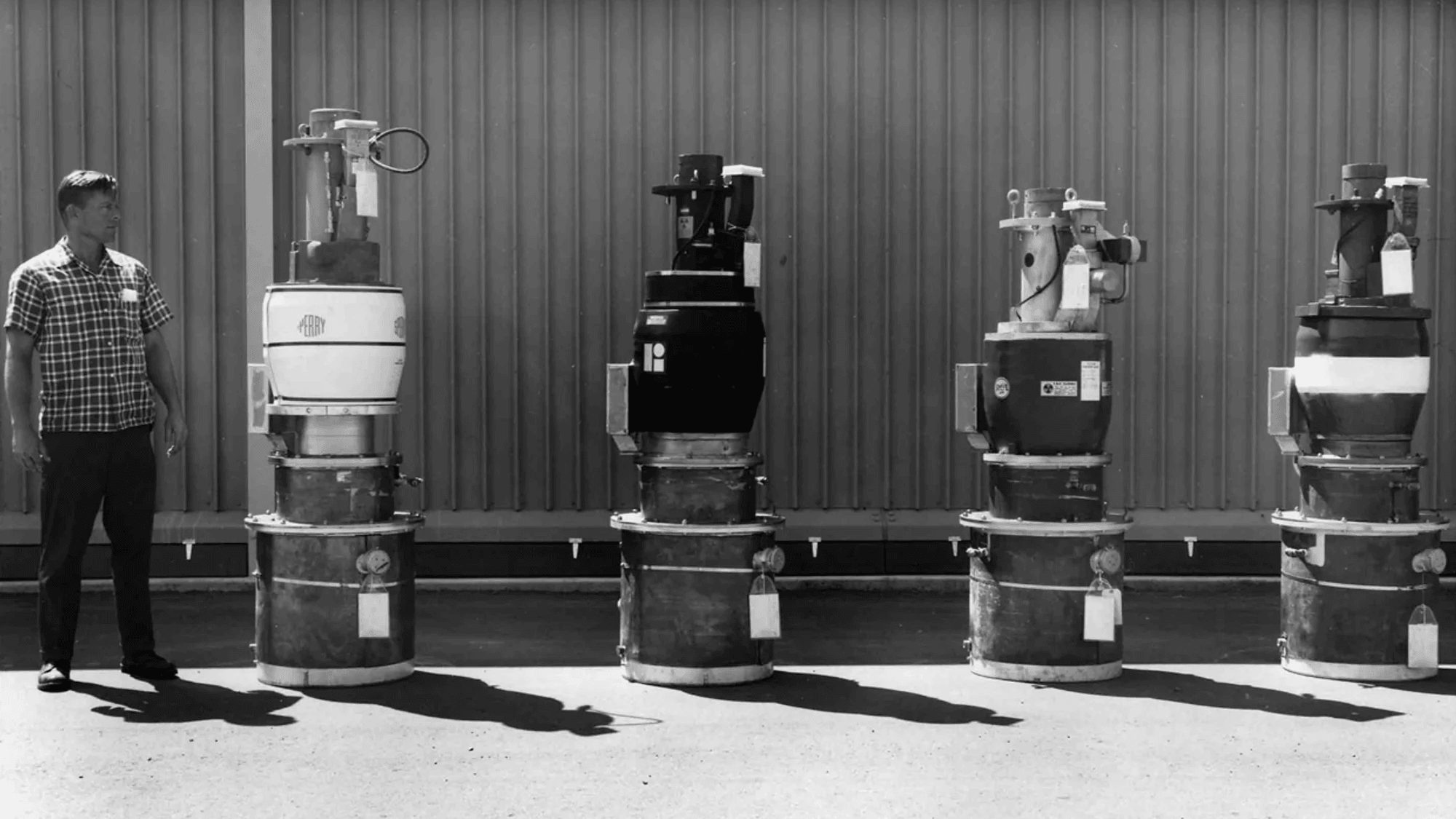
American pioneers of high-energy power systems: compact FRC fusion at Los Alamos (left, 1980s–1990s) and klystron HPM systems invented in Silicon Valley (right, 1940s–1950s).
The Stellios Platform
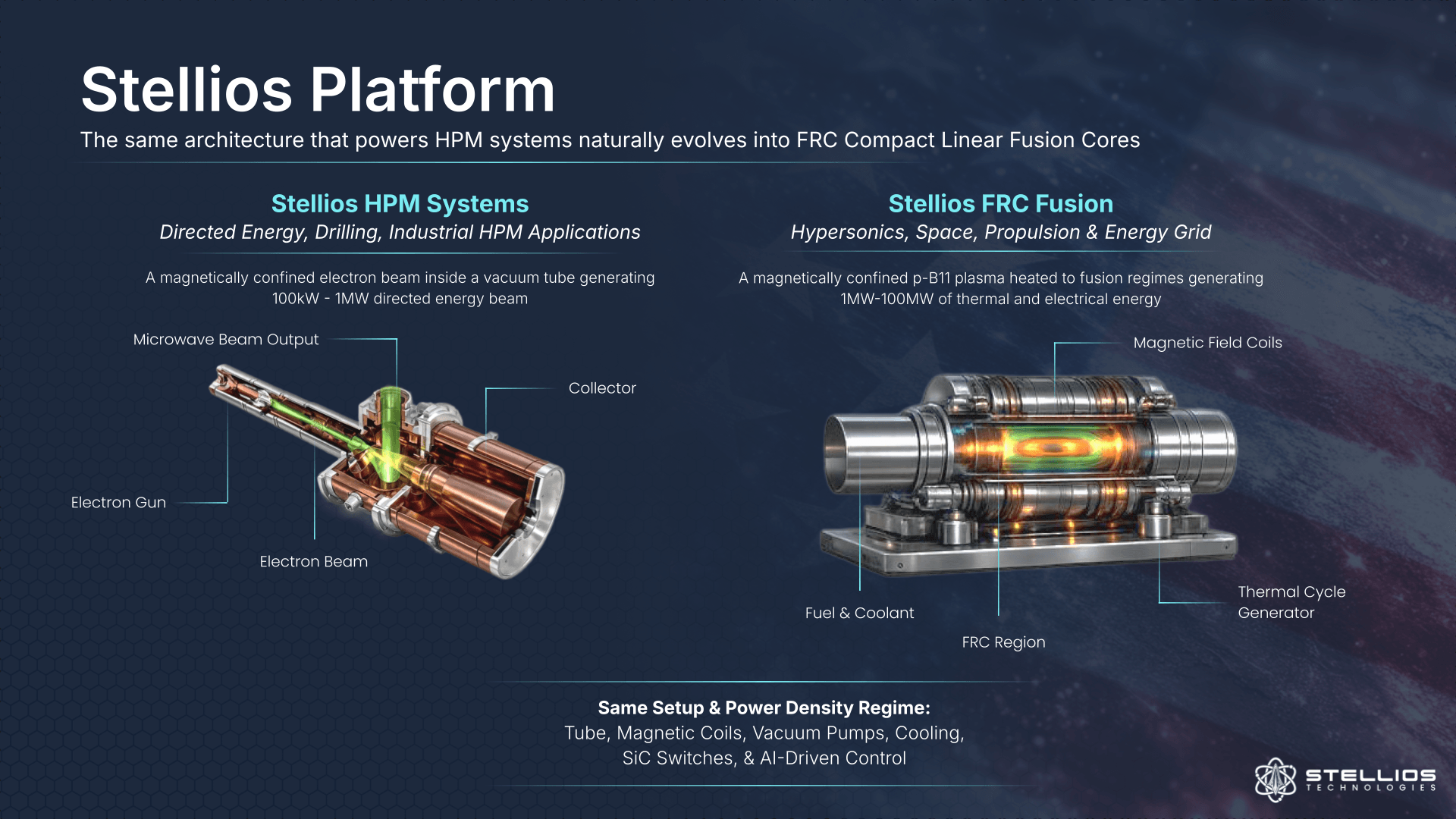
We are starting with high-power microwaves (HPM) to meet urgent national security demand for directed energy and counter-drone systems. Vacuum HPM devices such as gyrotrons and klystrons share deep technical DNA with compact fusion approaches like FRC and mirror confinement. Both are more mature, and our team has successfully built them before. This HPM beachhead generates early revenue, satisfies immediate defense needs, and lets us stand up a world-class power systems laboratory.
At its core, the Stellios Platform is a unified set of hardware and software building blocks designed to generate, control, and apply fusion-scale energy densities. The central element is a linear vacuum chamber featuring multi-Tesla magnetic fields and high-voltage electric fields that precisely shape flows of charged particles. In gyrotrons we control spinning electron beams to generate microwaves. In fusion we control toroidal flows of protons and boron-11, heated to fusion conditions. The same foundational technologies — high-field magnets, advanced vacuum systems, SiC power electronics, and real-time AI control — power both product lines.
The Stellios Master Plan
We are not betting on future revenue streams. We are selling Stellios Shield pilot units today and are planning on selling early pilots for Stellios Core in our second year of operation. We are also monetizing our in-house AI-driven engineering platform, Stellios Genesis.
We follow a deliberate, revenue-generating sequence to build the future of American power:
Build the enabling platform and revenue foundation
We are building Stellios Shield to address urgent defense demand for c-UAS technologies. Today's defense is rooted in expensive kinetic systems that do not scale against low-cost drone threats. We cannot shoot thousand-dollar drones with million-dollar missiles. The next generation of defense requires directed energy systems with speed-of-light engagement, near infinite magazine, and near-zero cost per engagement.
Stellios Shield generates early revenue, proves the core technologies in real environments, and allows us to build scalable in-house manufacturing capacity.
Deploy fusion where capability matters most
Leverage the Stellios platform, revenue, and operational experience to execute the Stellios Core development program. First applications include compact power for forward operating bases and high-Isp propulsion for hypersonics and space — markets where performance outweighs cost per kilowatt-hour.
Scale to abundant energy
As manufacturing matures and costs fall, the Stellios Core family expands into broader industrial, remote power, and eventually grid markets.
Stellios is not just a bet on compact fusion. We are a bet on the next generation of American power — from generation to conditioning to utilization across propulsion, defense, space, and energy.
Strategic Imperative
In a world where our adversaries are rapidly deploying AI-powered drone swarms, advancing hypersonic systems, and scaling space launch and energy infrastructure, the absence of a domestic high-energy power systems industry is no longer a technical deficiency — it is a strategic vulnerability. America must lead in the next generation power generation and directed energy technology and ensure that fusion-level power densities are pioneered and deployed in the United States first.
Countries that unlock fusion-level power densities will gain strategic advantage across directed energy, hypersonics, and space. Stellios is making sure that America leads this new frontier.
Let's build the future
of American power systems.